VCA DESIGN & PRODUCTION
GRADUATE SHOWCASE
GRADUATE SHOWCASE

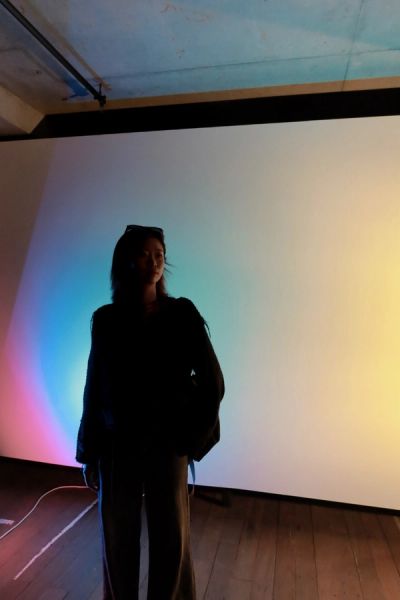
Yihui Liu is a graphic designer and Honours student at the University of Melbourne, specialising in the intersection of graphic design, cultural heritage, and practice-based research. Her work focuses on the Nüshu (women’s script), exploring how traditional writing systems can be reinterpreted through contemporary design practices. Drawing on autoethnography and typography, she creates work that connects cultures and opens space for alternative narratives. Her current design focuses on publication design and gently bringing overlooked cultural stories back into view.
Echoes of her, 2025
I would like to thank my supervisor, Ela Egidy, for her patient guidance and steady encouragement throughout this project. I am also grateful to Dr Danny Butt, whose insight and support opened the door for me to enter the world of research.
Booklet Content – Nüshu Poem
Booklet Content – Autoethnography
Booklet Content – Nüshu Calligraphy Copybook
Booklet Content – Special Layout
Life Pattern, 2025
The AR project builds upon my previous projection project, Life Pattern. Its core concept centers on how East Asian societies impose age-based constraints on individuals—such as mandatory elementary and middle school attendance; the college entrance exam as the sole pathway; the expectation to marry and secure suitable employment before age 30... The AR design precisely addresses the limitations of my projection project’s expression! It conveys the project’s core message more authentically and comprehensively. I designed it as a “walled city,” with a vast underground labyrinth formed by text—a space woven into a dense, suffocating web. It aims to create a sense of pressure.
AR Project – Actual effect
Chrononormativity, 2025
Chrononormativity—a term from Elizabeth Freeman (2010)—describes how societies regulate life through standardized timelines: finish university “on time,” secure a career, marry, reproduce, progress linearly.
In East Asian culture, this temporal logic is intensified:
one’s value is measured by speed, productivity, and alignment with the collective schedule. But in Australia, I encountered a different temporality.
Here, time feels open.
Pauses are allowed.
Starting late is not considered failure.
Between these two worlds, I feel both liberated and lost – their rhythms pull me in opposite directions.
How should I live?
Which clock should I follow?
The contrast reveals not only two ways of structuring time,but also the fracture of being in between.
Zine Content
ZIne Front Cover
Zine